UCET Annual Conference 2026
The role of university-led teacher education in a changing world
Keynotes
Spaces for teacher educator agency in a changing world: insights from climate change and sustainability education
Abstract
Education, including teacher education, is frequently positioned by international organisations and national governments as an essential response to complex global climate, nature and sustainability crises. Recently, researchers have considered how to foster teacher agency in relation to climate change and sustainability education. Much of this research has sought to understand why some teachers are able to achieve agency in relation to CCSE and what conditions, resources and qualities of teachers’ professional contexts constrain and enable agency. Drawing research from England, Scotland, Brazil and Chile, I will explore what insights this body of research may have for those with responsibility for creating and sustaining spaces of agency for teacher educators in a changing world. I will highlight one example from Scotland, the National Framework for Learning for Sustainability in Initial Teacher Education, co-created by teacher educators across Scotland, in partnership with the General Teaching Council of Scotland, Learning for Sustainability Scotland, and all eleven providers of ITE in Scotland.

Professor Lizzie Rushton
University of Stirling
More about Lizzie
Elizabeth Rushton is Professor of Education and Associate Dean for Research, Faculty of Health, Sport and Society, University of Stirling and nationally she is Deputy Chair for the Scottish Council of Deans of Education. Previously she has held leadership roles at the Institute of Education, University College London, including Head of Department and Director of Research of UCL’s Centre for Climate Change and Sustainability Education. Lizzie is a former secondary school geography teacher and holds a PhD in geography from the University of Nottingham. Her research and teaching are focused on Environmental and Sustainability Education, Teacher Agency, and Curriculum Making.
Where can we go from here? Exploring possibilities
Abstract
University-led teacher education is at a crossroads. External influences have shaped our recent history: policy turbulence, recruitment and retention challenges, financial insecurity, increasing workload pressures, and wider questions about the role of higher education in society. Yet times of uncertainty can also be moments of possibility.
Drawing on research into signature pedagogies in teacher education and insights from the Teacher Education 2050 project, this keynote explores how university-led provision can respond to a changing world while remaining true to its distinctive purposes. What kinds of knowledge, dispositions, and professional identities will future teachers need? How might teacher education evolve to prepare teachers not only for today's classrooms, but for unpredictable futures?
Rather than offering simple solutions, I invite you to take part in a collective reimagining of teacher education's role and contribution. By revisiting enduring purposes and emerging possibilities, I ask a timely and urgent question: where do we go from here?

Professor Clare Brooks
University of Cambridge
More about Clare
Clare Brooks is a Professor and Head of Faculty at the Faculty of Education, University of Cambridge. Her research focuses on how policy influences access to teacher education particularly for isolated communities, and the implications for high-quality initial teacher education at scale. She has also worked to redefine quality as a keyword in initial teacher education.
She leads the Teacher Education 2050 project, exploring what teachers and young people will need to thrive in 2050.
Knowledge, judgement and learning to teach: Lessons from university-led teacher education in South Africa
Abstract
Preparing teachers with teaching techniques is simply not enough. Teachers need principled knowledge and the capacity for pedagogic reasoning to respond to changing curricula, social priorities and increasingly diverse classrooms. University-led teacher education has a distinctive role in laying foundations for knowledgeable, thinking professionals able to undertake the central work of managing knowledge and enabling its learning in well-organised classrooms.
The post-apartheid relocation of teacher preparation from training colleges into South African universities created opportunities for research-informed teacher education. It also surfaced challenges of connecting university learning with classroom practice in diverse contexts. The South African experience highlights the dangers of fragmentation across discrete competencies and disconnected sites of learning.
I reflect on these challenges through four national initiatives I have helped develop and research. They address the need for theoretically grounded conceptions of teaching and coherent pathways for learning to teach across university coursework and school-based learning:
- teaching practice observation instruments that reflect increasingly competent teaching as reasoned and contextually responsive
- national professional teaching standards that position teaching as a knowledge-based practice requiring ethical decision-making and professional judgement
- structured preparation for learning from school-based observations and classroom experiences
- new teacher induction that connects generalised insights from university study with the contextual demands of classroom teaching.
I conclude by reflecting on what the South African experience might offer to wider debates about university-led teacher education. This includes the value of building a strong theoretical and empirical research base on how teachers learn to teach. It also points to the importance of a collective scholarly voice that can inform teaching, teacher education and policy reform.
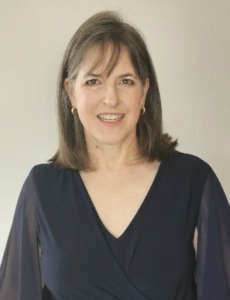
Professor Lee Rusznyak
University of Witwatersrand, Johannesburg
More about Lee
Lee Rusznyak is Professor of Teacher Education at the University of the Witwatersrand, South Africa. Her research focuses on how teachers learn to teach and the knowledge, pedagogic reasoning and professional judgement that underpin classroom practice. She has led and contributed to several national initiatives aimed at strengthening initial teacher education and supporting teachers’ professional learning. Her work brings together research, policy and programme development, with a particular interest in the contribution of universities to teacher education. She is Director of the Wits Legitimation Code Theory Hub and a member of the UNESCO Chair in Teacher Education for Diversity and Development.
Reclaiming the Future of Teacher Education in a Global Policy Arena: A Critical Analysis and a Bold Proposal
Abstract
Across Europe and beyond, teacher education has become a site of intensified reform and policy intervention. A familiar pattern is emerging across jurisdictions: a growing focus on particular forms of evidence (‘what works’), the privileging of the practical over the theoretical, increasing demands for flexibility, and a tendency to equate teaching quality with uniformity of practice. This keynote explores why teacher education is so susceptible to this narrowing of possibilities. Using the “bromance” between Flanders and England as a concrete case, I examine how much of what is presented as the logical way forward derives its legitimacy from networks of actors, organisations and interests that shape which ideas gain authority and currency.
Building on this analysis, I argue that familiar calls to give teacher educators “more voice” in policy processes remain too modest and risk reinforcing the very dependencies they seek to overcome. Instead, I pose a bolder question: what would it mean for teacher educators to self-govern the profession and shape its future? Drawing inspiration from medicine and law, I explore the rights, responsibilities and new tensions such a model might entail. The keynote serves as an invitation to challenge taken‑for‑granted assumptions about policy and professionalism, and to recover the confidence and imagination needed to shape the future of teacher education on our own terms.

Professor Eline Vanassche
KU Leuven University, Belgium
More about Eline
Eline Vanassche is Associate Professor at KU Leuven (Belgium) and a former Marie Skłodowska-Curie Fellow at the University of East London (UK).
Her research explores how contemporary policy and practice developments shape the teaching profession. She has a particular interest in teacher education, as it is often among the first fields affected by reform agendas. Her work adopts an interdisciplinary, mostly qualitative approach and increasingly includes a comparative perspective, reflecting the internationalization of reform ideas and agendas.
Eline Vanassche is also an active member of the International Forum for Teacher Educator Development (https://info-ted.eu).
The UCET Teacher Education Blog at One: Reflections, Impact and Future Possibilities
Abstract
Drawing on the collective expertise of the panel members, this keynote panel discussion will reflect on the impact and development of the UCET Teacher Education Blog, one year after its launch at the UCET Annual Conference 2025. The session will celebrate the contributions made through the platform, showcase the range and reach of published posts, and explore the future possibilities of the blog as a space for professional dialogue – a space where colleagues from across England, Wales and Northern Ireland continue to connect, collaborate and contribute to the advancement of knowledge, understanding and practice within teacher education.
Alongside the panel discussion, delegates will have the opportunity to contribute their own reflections and ideas through an interactive Padlet, enabling audience participation and the sharing of perspectives on the blog's future development.
The session will begin with a brief overview of the blog, including key statistics and milestones from its first year. The panel chair will then facilitate a discussion with colleagues who have been closely involved in the development, implementation and quality assurance of the blog. This will be through a series of reflective questions, such as:
- Do you have a favourite post or one which has resonated most strongly with you?
- Have you noticed any emerging themes across the published posts?
- Which post(s) do you think speak best to policy and why?
- Is there a post you feel really demonstrated how authors can connect their writing to the IBTE?
- Has a particular post challenged your thinking or influenced your professional practice?
- Which posts do you think align most closely with this year's conference theme?
- What emerging issues/hot topics and priorities do you think should shape the future direction of the blog?
- How do you think the blog might be used in the future?
The panel will meet in advance of the conference to identify key discussion points and ensure broad coverage of published contributions. This preparatory work is intended to support a rich and inclusive discussion while maintaining the spontaneity and responsiveness that are central to this panel discussion.
Ultimately, the discussion will provide an opportunity to celebrate the blog's successes to date while collectively considering how we continue to meet the aims and purpose of the blog.
Other details
Update 5 November
We have now nearly sold all the bedrooms we are holding for 10/11.
Keynotes confirmed include:
- Professor Clare Brooks (University of Cambridge)
- Professor Lizzie Rushton (University of Stirling)
- Professor Lee Rusnyak (University of the Witwatersrand, Johannesburg)
- Professor Eline Vanassche (KU Leuven University, Belgium)
- Dr Keither Parker (York St. John), with Professor Lisa Murtagh (Manchester), Dr Rupert Knight (Nottingham), Professor Martin Hagan (St. Mary’s University
College, Belfast) and Professor Aimee Quickfall (Durham University)
Overall conference structure
To embed the theme for the conference throughout the two days, all presenters are being asked to consider how their input contributes to the overall theme, and their responses to the following questions:
- What one feature of a changing world will most impact teacher education and how should we as university teacher educators respond?
- What should/could UCET do to support universities in a changing world?
Across, both days there will be opportunities for all delegates to discuss the questions and develop a collective response that can be built on beyond the conference.
Workshop Sessions
There will be three different formats to sessions: a traditional one hour session, a session with 2 presenters with short presentations and Q&A opportunities after each session and cross-institutional sessions.
Evening
There will be a drinks reception sponsored by Penrose Education followed by the gala dinner.
Networking
Built into the programme will be structured opportunities for networking and discussing current challenges. There will also be embedded support for new colleagues, new presenters and new leaders of ITE.
Key Dates
Friday 6th November - Please let us know by this date at the very latest if you require Monday night accommodation (£160) before the conference opens.
10 November - Conference opens
| Registration Fees | |
| Whole Conference – includes B+B and Gala Dinner on Tuesday 10 November | £475 |
| Day Delegate Rate | £240 |
| Early Bird Offers | Individual 10% discount 5+ delegates 15% Discount |
| Multi-delegate offer after 31 May | 5+ delegates 10% discount |
| B+B Monday 9 November | £160 |
| Gala Dinner only | £55 |
| Presenter Fees | |
| Keynote Speakers | Free attendance at conference, including accommodation and Gala Dinner |
| Presenters | Free attendance on day of presentation - normally £240, this is an excellent opportunity to access all aspects of one day of the conference at no cost or reduced conference fee of £425 (includes full conference attendance, Bed and Breakfast, all conference meals and Gala Dinner) |