Developing as inquiring professionals through professional networks and communities of practice
Blog authors:
Eleanor Milligan (University of East Anglia)
Janet Morris (University of Greenwich)
Lorna Williams (University of Worcester)
Viki Veale (St. Mary's University, Twickenham)
A community of practice is more than a group that meets occasionally; it is a long‑term collective that develops shared meaning, language and practices through regular interaction (Wenger, 1998). These communities shape professional identities through the connections and relationships they form, helping trainees become inquiring professionals; individuals who question assumptions, draw on evidence and critically reflect on how their choices affect children’s learning, wellbeing and rights.
Initial teacher education in England takes place across a diverse landscape of universities, school-based routes and partnership models. Although these routes vary, all aim to prepare new teachers with strong subject knowledge, confident professional identities, and the capacity to make principled decisions. However, developing the ability to navigate policy, theory, research, and the complex realities of professional practice in schools can be challenging. Professional networks and communities of practice offer a powerful means of addressing this challenge. As such, they are sites of inquiry that shape practice and the formation of emerging teacher identities.
Stenhouse (2012 p128) advises that ‘inquiry should be rooted in deeply felt curiosity...’. He believed that inquiry is most meaningful when theory is linked to the everyday realities of classroom life. In collaborative network spaces, such as online forums or facilitated discussion groups, student teachers learn how ‘evidence’ can inform their pedagogic reasoning in dynamic, context‑responsive ways. This might involve examining how different assessment approaches shape children’s engagement, for example or perhaps analysing why certain pedagogic decisions support wellbeing while others may unintentionally limit children’s participation. This can be particularly valuable for those specialising in early childhood, as both the Core Content Framework (DfE, 2019) and practice in schools tends to reflect the needs of older children.
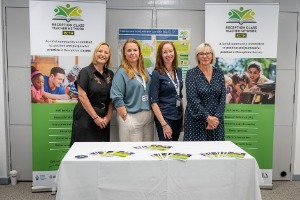
TACTYC Together And Committed To Young Children and RCTN Reception Class Teacher Network are just two examples of communities of practice that support the development of inquiring professionals and contribute to democratic change in the Early Years Foundation Stage. Initially established in 1978 to create a community of practice which would support early years specialists in higher education, TACTYC’s membership now includes not only includes academics, but a growing number of student members creating a vibrant community committed to young children. Members are able to share sector-specific research through our journal, bi-monthly webinars, and annual conference. RCTN offers half termly meetings bringing together trainees, early career teachers, experienced practitioners, leaders and researchers for expert input, small-group discussions, and reflective dialogue. Through this dialogue, Reception class teachers and trainees develop confidence in their professional reasoning, and understanding that teaching in the early years is intellectually rigorous, values‑driven and collaborative.
There are many other networks out there, each with their own focus and particular set of aims. What is shared between them is that when educators come together to discuss concerns, reflect on practice and share values, their collective voice becomes stronger. These professional networks provide a safe and supportive space in which trainees hear experienced teachers discussing issues openly and where they are able to share fresh perspectives on received practice. These critical discussions promote an appreciation that reflection and inquiry are integral to professional life: that inquiry is not only a question of ‘what works?’ but an ethical and political endeavour that requires us to reflect on ‘what matters, and for whom?’.
As teacher educators, we play a key role in bridging practical knowledge with academic knowledge. It is our responsibility to foster the development of inquiring professionals who will be critical agents of change. We must model this stance by questioning dominant discourses, unpacking policy assumptions, and analysing the structures that shape educational practice. In a sector facing workforce shortages, rising demands and shifting expectations, nurturing such collaborative spaces is essential both for supporting teacher wellbeing and for ensuring high‑quality education and care for children.
Too often as teachers and teacher educators, we work in silos. Within these silos, it is all too easy to focus on top-down directives without first interrogating the impact they may have on the students in our care. As Euade (2011) wrote, no one can be expected to emerge from their initial training fully formed, nor can they be expected to have the confidence to challenge received practice alone or to do so from an informed perspective. By sustaining our own engagement in communities of practice, we model inquiry-oriented practice and ensure the currency of our content. By introducing trainees to professional networks, we don’t just introduce them to opportunities to learn from more experienced colleagues; we help shape future educators who will continue to develop as inquiring professionals throughout their careers.
References
DfE. (2019). ITT Core Content Framework. Available at: https://assets.publishing.service.gov.uk/media/6061eb9cd3bf7f5cde260984/ITT_core_content_framework_.pdf
Euade, T. (2011). Thinking Through Pedagogy for Primary and Early Years. Learning Matters.
Stenhouse, L. (2012). Research as a basis for teaching. In Curriculum, pedagogy and educational research (pp. 122-136). Routledge.
Wenger, E. (1998). Communities of practice: Learning, meaning, and identity. Cambridge University Press.