Bridging the Identity Gap: research and scholarship groups as catalysts for academic growth in university-led pre-service teacher education
The Identity Challenge in University-led Pre-Service Teacher Education
Over the last fifty years, in many countries, universities have seen the opportunity to shape practice in schools by educating teachers in ways which foster their critical and intellectually-rigorous development. Indeed, UCET “recognises that teaching is a challenging, complex, intellectual and ethical endeavour” and enables “the positive, transformational contribution that education can make to communities, and to the development of more socially just and sustainable societies.”(UCET, 2020). At its best, there is a recognition in universities that pre-service teacher (PST) education contributes to a wider societal agenda around public service, professional agency and social justice, by making critical academic study a fundamental part of teachers’ developing practice.
However, implementing these intentions presents institutional and professional challenges, particularly in a context in England of increased regulatory control over Initial Teacher Education, including, for example, the imposition of a centralised curriculum (DfE, 2024). Universities must adapt systems to support partnerships with schools, while teacher educators must navigate contradictory demands as both academics and knowledge brokers working with school colleagues.
The Research-Practice Divide
A unique feature of many education departments in UK Higher Education Institutes is the unorthodox entry of teacher educators into academia. Unlike traditional academics who enter universities through doctoral study, teacher educators typically enter academia based on extensive classroom experience rather than research profiles. While this practice-based approach ensures high-quality instruction for trainee teachers, these educators often experience tension between their identity as “teacher experts” and broader university expectations.
Indeed, there is often an observable disconnect between the role of a PST educator working with (and measured by) government-led policies, frameworks and wider school-based partnerships and the wider academic responsibilities associated with scholarship and research within a Higher Education Institute.
Contractual Realities and Academic Recognition
PST educators may find themselves on Teaching and Scholarship (T&S) contracts rather than Teaching and Research (T&R) contracts. This distinction has implications for academics whose identity as “scholars” receives little acknowledgment in the Research Excellence Framework (REF)—a high-stakes exercise influencing university rankings and reputation.
In response, the Manchester Institute of Education has reframed its Research Groups as Research and Scholarship Groups (RSGs) to value the contributions of T&S colleagues. The university has also revised its promotions criteria to explicitly recognise and reward scholarship activity.
Research and Scholarship Groups: A Support Framework and Implementation Challenges
As co-convenors of the Teacher Education and Professional Learning (TEPL) RSG, we promote links between teaching and scholarship through various activities. RSG membership provides benefits including:
- Regular reading groups offering scaffolded engagement with research discussions
- A supportive community that facilitates collaborative research projects
- Motivation for maintaining research momentum
- Peer support and mentorship
These groups align with the vision of teacher education as professional collaboration where universities “offer spaces to come together to think, reflect, critique, analyse and explore ideas and create new research” (UCET, 2020). Working with experienced colleagues fosters belonging and counteracts the “imposter syndrome” felt by many new scholars.
However, engagement levels vary among colleagues. Despite a lengthy membership list, the same core group takes an active role in most activities. Reasons include heavy teaching loads and caring responsibilities. The voluntary nature means those who might benefit most from support may self-exclude, potentially widening the gap between research-active and teaching-focused academics.
External expertise and future plans
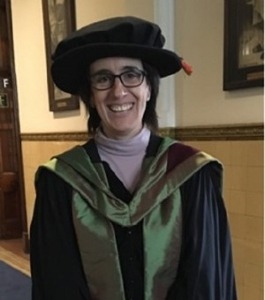
To address these challenges, TEPL has engaged Professor Jean Murray, who has extensive expertise in researching teacher education. Her mentoring is expected to offer valuable insights, promote engagement possibilities, provide guidance, and help create a cohesive environment where inquiry is valued. External expertise will help elevate our profile within the broader academic community.
This approach is particularly significant in aligning RSGs with institutional priorities, including contributions to the Teaching Excellence Framework and the IMPACT agenda, which both emphasise demonstrable benefits of research for students and society.
As UK universities continue to emphasise research output, supporting teacher educators through RSGs becomes increasingly vital for both individual career development and institutional success. By cultivating a culture of collaboration and innovation among teacher educators, TEPL ensures not only stronger individual contributions to REF outputs but also an enhanced institutional profile in areas such as societal impact.
References
- Department for Education. (2024). Initial teacher training and early career framework. https://assets.publishing.service.gov.uk/media/661d24ac08c3be25cfbd3e61/Initial_Teacher_Training_and_Early_Career_Framework.pdf
- UCET The Intellectual Base of Teacher Education Report https://www.ucet.ac.uk/11675/intellectual-base-of-teacher-education-report-updated-february-2020
With thanks to Professors Andy Howes and Lisa Murtagh for their input into the development of this blog.